

Fall Furnace Tune-Up in Ontario: Why Timing Matters More Than You Think

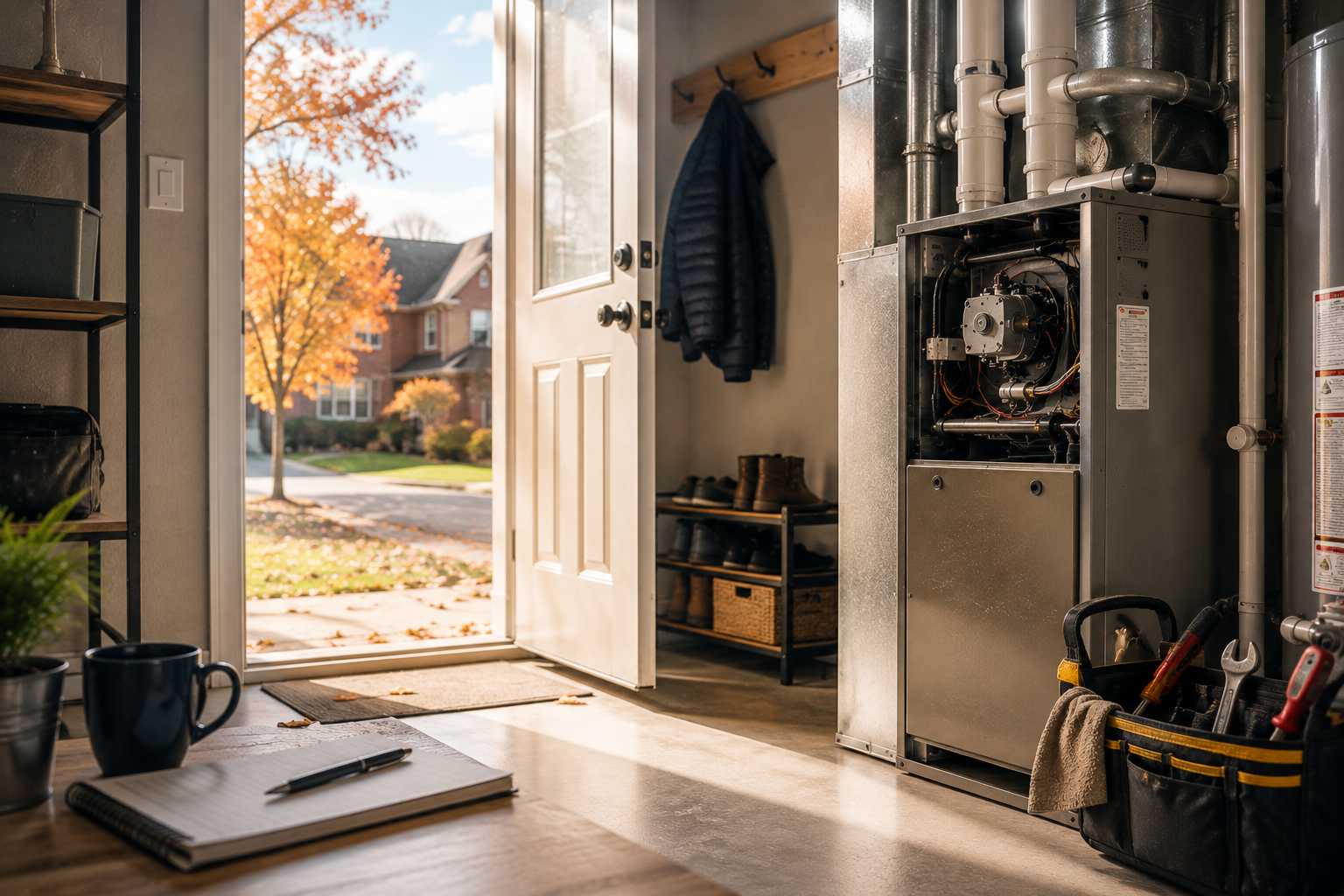
Most furnace problems don't announce themselves in July. A worn flame sensor, a dirty burner, a capacitor that's slowly losing its charge — none of that shows up while the system has been sitting idle all summer. It shows up the first night the temperature drops below freezing and the furnace has to run for hours instead of minutes. That's exactly when Ontario homeowners discover a small issue the hard way, usually alongside a full voicemail box at every HVAC company in the GTA. A fall furnace tune-up is simply the way to find that problem in September instead of finding it in January.
This isn't an argument for buying new equipment. Most furnaces that get an annual check run more efficiently, break down less often, and last longer — that's the entire case for scheduling one.
What a Professional Furnace Tune-Up Actually Covers
A real pre-season inspection is more than swapping a filter. When a licensed technician tunes up a furnace, the work typically includes:
- Inspecting the heat exchanger for cracks or corrosion, since this affects both safety and carbon monoxide risk
- Checking venting and exhaust to confirm combustion gases are actually leaving the home
- Testing the ignition system, flame sensor, and safety controls
- Cleaning burners and blower components so the system isn't working harder than necessary
- Replacing or cleaning the air filter
- Confirming thermostat calibration and cycle behaviour
- Testing electrical connections, amp draw, and the blower motor's capacitor
- Verifying airflow and static pressure through the ductwork
Individually, each item is minor. Together, they're the difference between a furnace that runs quietly all winter and one that trips a fault code on the coldest night of the year.

Why Timing Matters for Furnace Maintenance in the GTA
Ontario winters don't ease in gradually. The region can go from mild afternoons to sustained sub-zero temperatures within a couple of weeks, often by late October. A furnace that performed fine on its last light spring cycle suddenly has to run for hours a day, and any part that was already marginal tends to fail under that first real load rather than fading out slowly.
Booking a tune-up in September or early October — before that seasonal shift — has a few practical advantages. Technicians have more scheduling flexibility than they will in November. A minor issue caught now becomes a planned repair rather than an emergency one. And older housing stock across Richmond Hill, Markham, Vaughan, North York, Mississauga, Brampton, Scarborough, and Etobicoke tends to benefit the most, since furnaces installed a decade or more ago are more likely to have components nearing the end of their service life.
What a Tune-Up Actually Protects Against
- Safety. A cracked heat exchanger or blocked venting are the two most common sources of carbon monoxide risk in a furnace system. Both are difficult for a homeowner to detect without the right tools, but straightforward for a technician to catch during a proper inspection.
- Efficiency. A furnace running with dirty burners, a clogged filter, or fouled components has to work harder to deliver the same amount of heat — and that shows up directly on winter utility bills. Cleaning and recalibration bring the system back toward its rated efficiency.
- Fewer breakdowns. Most no-heat service calls trace back to something that was already showing early signs of wear: a weakening igniter, a capacitor losing capacitance, a sensor drifting out of calibration. Catching these in the fall turns what could be a late-night emergency into a routine, scheduled repair.
- Longer equipment life. A furnace running dirty or out of calibration puts extra strain on the blower motor, heat exchanger, and ignition components. Regular maintenance spreads that wear out more evenly and typically extends how long the system lasts before replacement becomes necessary.
- Peace of mind. Knowing a licensed technician has verified the system is a different feeling than hoping it starts on the first genuinely cold morning — particularly for anyone managing a rental property, a condo unit, or a household with young children or older adults who are more sensitive to a cold home.
Repair or Replace? A Tune-Up Gives You an Honest Answer
One of the more useful side effects of an annual inspection is that it tells you exactly where your furnace stands. If a technician finds a cracked heat exchanger, a flame sensor that keeps failing, or a unit that's already 18 to 20 years old and getting more expensive to keep running, that's valuable information — it means a furnace replacement can be planned on your own timeline, during the off-season, rather than decided in a panic when the system dies in the middle of winter.
It's also a reasonable point to look at whether a heat pump makes sense as the replacement option, since a growing number of GTA homeowners are pairing or replacing an aging furnace with one. Rebate and incentive programs for heat pumps in Ontario change from year to year some have wound down while others have opened up so it's worth confirming what's currently available before assuming a specific program applies. 4Most Energy can walk through current options as part of that conversation.

Furnace Maintenance for Condos and Multi-Unit Buildings
Fall furnace maintenance in a condo or multi-unit building usually comes with an extra layer of coordination: mechanical room access, building management scheduling, and in some cases board approval if a component needs replacing rather than repairing. Booking early in the season gives property managers time to arrange that access and, if a larger repair turns out to be needed, to get quotes and approvals in place before residents are depending on that heat every day.
A fall furnace tune-up is inexpensive relative to what it protects against: a system that runs safely and reliably through the coldest months, a lower chance of a mid-winter emergency, and a clear, honest picture of whether your equipment has several more winters left or is approaching the point where replacement makes more financial sense. Booking it before the weather turns just means that decision happens on your schedule, not the furnace's.
What Happens If You Skip It
Skipping a fall tune-up doesn't guarantee a breakdown, but it does raise the odds — and it takes away your ability to choose the timing if something does go wrong. A furnace that's already borderline in September is far more likely to fail once it's running for hours a day in December. At that point, you're dealing with a cold house, an emergency repair, and whatever appointment availability is left during the busiest weeks of the year.
FAQ
How often should a furnace be tuned up?
Once a year is the standard recommendation, ideally in early fall before the heating season starts. Some manufacturers require documented annual maintenance to keep the warranty valid, so it's worth checking your furnace's paperwork.How long does a furnace tune-up take? A thorough inspection and cleaning typically takes about 45 minutes to an hour and a half, depending on the furnace's age, accessibility, and whether any additional issues are found along the way.
How long does a furnace tune-up take?
A thorough inspection and cleaning typically takes about 45 minutes to an hour and a half, depending on the furnace's age, accessibility, and whether any additional issues are found along the way.
Can I do a furnace tune-up myself?
Homeowners can safely handle basic tasks like changing the air filter and keeping the area around the furnace clear. Anything involving the heat exchanger, gas connections, electrical components, or combustion safety should be left to a licensed technician, since these require specialized testing equipment and training to assess correctly.
What's the difference between a tune-up and a repair?
A tune-up is preventive: it inspects, cleans, and calibrates a system that's currently working, with the goal of catching small issues before they become failures. A repair addresses a specific problem after something has already stopped working correctly.
Is a furnace tune-up worth it if my furnace seems fine?
Yes — many of the issues a tune-up catches, like a hairline crack in a heat exchanger or a capacitor nearing the end of its life, don't produce noticeable symptoms until they fail outright. "Seems fine" and "is fine" aren't always the same thing with combustion equipment.
How do I know if my furnace needs replacing instead of another tune-up?
Signs it may be time to consider replacement rather than another repair include a unit older than 15 to 20 years, a cracked heat exchanger, repeated breakdowns of the same component, rising repair costs relative to the system's value, or a noticeable decline in efficiency. A tune-up inspection is one of the most reliable ways to get a clear answer, since it gives a technician a direct look at the equipment's actual condition rather than a guess based on age alone.
If you're not sure whether your furnace just needs a fall tune-up or is closer to needing replacement, 4Most Energy can assess your system and walk you through the options that make sense for your home, budget, and comfort needs — before the cold weather makes that decision for you.
Request Your 20-Minute Estimate
Our Heat Pump expert will review your info, prepare an official estimate, and contact you within 20 minutes