

Smart Thermostat Fall Setup Guide for Ontario Homes

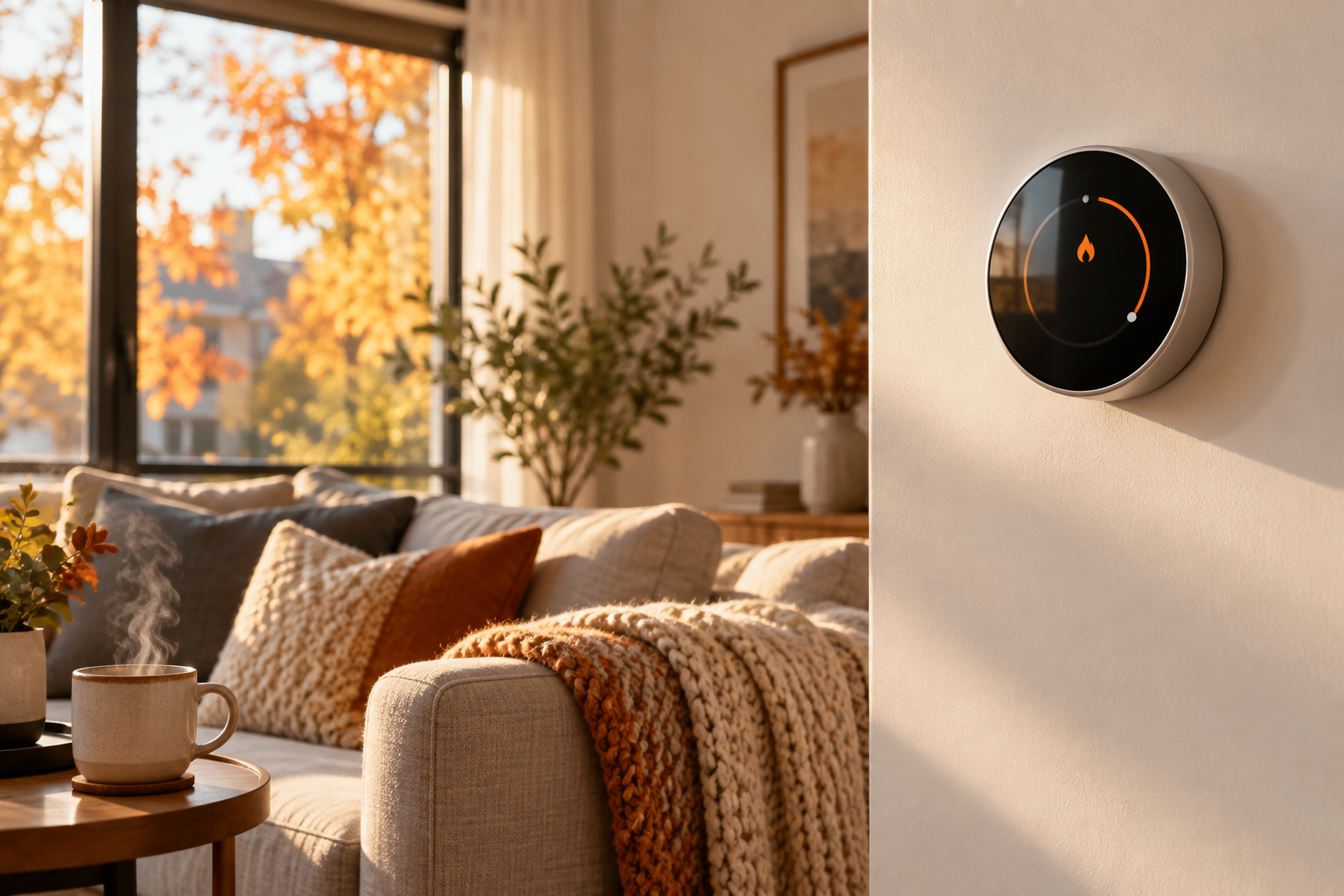
Your Thermostat Still Thinks It's Summer: A Fall Smart Thermostat Guide for Ontario Homes
It's the first cold morning of the season. You wake up to a chilly house, turn the heat up by hand, forget about it, and come home to a place that's been heating empty rooms all day. Most thermostats in Ontario are still running on schedules set in July. Some have no schedule at all.
Fall is a good time to fix that. The daily routine changes, outdoor temperatures swing a lot from morning to afternoon, and your furnace or heat pump is about to do most of its work for the year. A smart thermostat in Ontario can take over a lot of the manual adjusting. For now, eligible homeowners can also get a $125 rebate on qualifying models through the Home Renovation Savings program.
This guide explains what a smart thermostat actually changes, how to set it up for fall, what to check before you buy one, and when an upgrade isn't worth it.
Why Fall Is the Right Time to Reset Your Thermostat
In Southern Ontario, early fall can mean a 5°C morning and a 20°C afternoon. A thermostat that holds one fixed setpoint, or one still following a summer cooling routine, handles that poorly. It either overheats the house in the afternoon or leaves you cold at wake-up.
There are also practical reasons to do it now instead of in January:
- Your heating system is just starting up. It's easier to tune schedules and spot problems (short cycling, uneven rooms) before the heavy heating months.
- Service demand is lower. Once the first real cold snap hits, HVAC contractors across the GTA get busy with no-heat calls. Installation and setup are easier to book before that.
- Routines are changing. School, work schedules and shorter evenings all change when people are home. Your heating schedule should follow.
What a Smart Thermostat Actually Does Differently
Standard programmable thermostats can run schedules too, but many people never program them, or set them once and never touch them again. Smart thermostats close that gap in a few ways.
Schedules That Match Real Life
You can set separate weekday and weekend routines, such as a warmer wake-up, a setback while everyone's out, and a comfortable evening, so the heat follows how your household actually uses the house. Many models make this easier through an app instead of small buttons on the wall unit.
Control From Anywhere
With the app, you can change the temperature from upstairs, from work, or on the way home. That helps when plans change. If you're home late, you can push back the evening warm-up so you're not heating an empty house.
Steadier Comfort as the Weather Shifts
Many smart thermostats learn how long your home takes to reach temperature and start heating accordingly, so the house is warm at the time you set, not an hour later. Some models also support remote room sensors, which can help in homes where one floor runs colder than another.
Fewer Manual Adjustments
Once a good schedule is running, most people stop touching the thermostat. That's where much of the energy saving comes from. It's less about the device itself and more about not heating the house when nobody needs it.
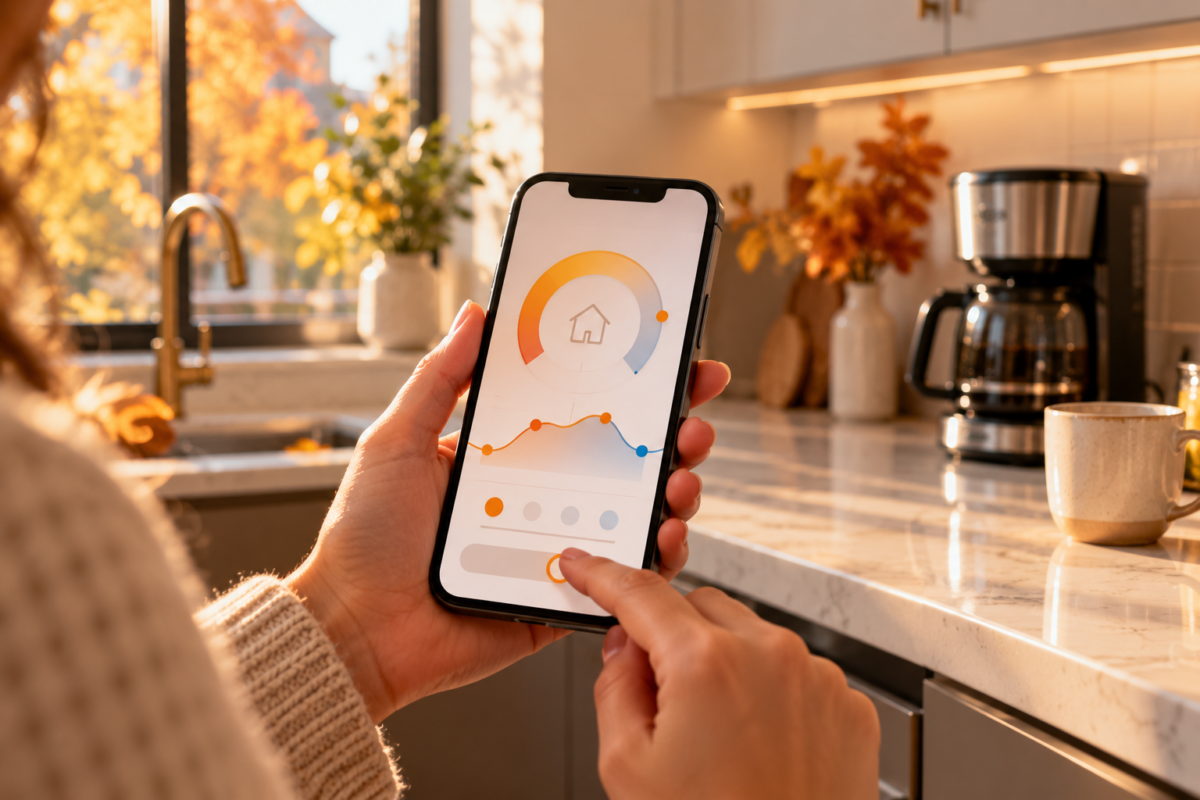
How to Set Your Smart Thermostat for Fall
Settings depend on your household, but this is a reasonable starting point for most Ontario homes:
| Time block | What to set | Why |
|---|---|---|
| Wake-up | Comfortable setpoint, timed to be reached when you get up | Avoids the cold-morning scramble |
| Daytime (house empty) | Modest setback of a few degrees | Reduces run time without a long recovery |
| Evening | Back to comfort temperature before you arrive | House is warm when you walk in |
| Overnight | Slightly cooler setpoint | Many people sleep better cooler, and the system works less |
A few practical notes:
- Keep setbacks moderate if you have a heat pump. A large setback can make some systems lean on backup or auxiliary heat to recover, which costs more to run. A smaller setback, or a thermostat that supports heat pump recovery logic, is usually better. Check your equipment's guidance.
- Switch the system mode from cooling to heating and confirm that fan settings make sense for winter (usually "auto").
- Replace the furnace filter while you're at it. A clogged filter hurts comfort no matter how good your thermostat is.
- Watch the first week of run times. If the system is turning on and off very often, or rooms feel uneven, that points to the equipment or ductwork, not the thermostat.

Before You Buy: Compatibility Checks
Not every smart thermostat works with every system. Before choosing one, check:
- Your heating equipment. A standard gas furnace is usually simple. Heat pumps, dual-fuel systems, multi-stage equipment, boilers and hydronic systems each have specific wiring and control needs.
- The C-wire. Many smart thermostats need a common wire for continuous power. Older GTA homes often don't have one at the thermostat, which can mean an adapter or new wiring.
- Line-voltage heating. Electric baseboards run on line voltage and need a thermostat designed for that. A typical low-voltage smart thermostat won't work with them.
- Condo systems. Many condos use fan coils or heat pumps tied into a building system, and some have board rules about equipment changes. Check what your unit's system supports and whether approval is needed.
- Rebate eligibility. Only qualifying models count toward the rebate, so confirm a model is on the eligible list before you buy.
The $125 Smart Thermostat Rebate
What to Know
Ontario's Home Renovation Savings program offers a $125 rebate on qualifying smart thermostats for eligible homeowners. It's one of the easier energy upgrades to make: low cost, quick to install, and no major renovation.
Keep in mind:
The rebate applies to qualifying models only, not every smart thermostat on the market.
Eligibility rules apply through the program, and program details can change. Confirm current requirements on the Home Renovation Savings website before purchasing.
If you're also considering a larger upgrade, such as a heat pump, the program may offer other incentives. It can make sense to plan the thermostat and equipment together.
When a Smart Thermostat Won't Solve the Problem
A new thermostat is a control upgrade, not a repair. If your home has any of these, deal with them first or at the same time:
- A furnace or heat pump that short cycles, makes new noises, or struggles to reach temperature
- Rooms that are consistently much colder than the rest of the house (often ductwork, insulation or airflow)
- Equipment that's near the end of its life and needs frequent repairs
In those cases, a smart thermostat can make things more convenient, but it won't fix comfort. Sometimes a repair or tune-up is enough. Sometimes aging equipment is a better candidate for replacement, and the thermostat can be chosen to match the new system. A professional assessment can help you tell which it is.
FAQ
Do I qualify for the $125 smart thermostat rebate in Ontario?
Eligible Ontario homeowners may qualify through the Home Renovation Savings program, but only on qualifying models, and program rules apply. Check current eligibility on the program's website before you buy.
Will a smart thermostat work with my heat pump?
Many will, but heat pumps and dual-fuel systems need a thermostat that supports them. Setback settings should also be moderate to avoid relying on backup heat.
What if my home doesn't have a C-wire?
Many smart thermostats need one for continuous power. Older homes often don't have it, but an adapter or a new wire run can usually fix that during installation.
What temperature should I set my thermostat to in the fall?
There's no single right number. A comfortable setpoint when you're home and awake, with modest setbacks during the day and overnight, works well for most households.
Can I use a smart thermostat with electric baseboard heaters?
Only one designed for line-voltage heating. Standard low-voltage smart thermostats aren't compatible with baseboards.
Will a smart thermostat fix uneven room temperatures?
It can help, especially models with remote sensors. But large temperature differences usually come from airflow, ductwork or insulation, which need to be assessed on their own.
Getting Your Home Ready for the Heating Season
For most Ontario homeowners, a qualifying smart thermostat is a practical fall upgrade. It gives you schedules that fit real life, control from your phone, and fewer manual adjustments as temperatures drop. Set it up before the busy winter season, confirm it works with your system, and check your eligibility for the $125 Home Renovation Savings rebate before you buy.
Request Your 20-Minute Estimate
Our Heat Pump expert will review your info, prepare an official estimate, and contact you within 20 minutes