

Why Is Your Upstairs So Hot? How to Fix the Hot-Second-Floor Problem in Your GTA Home

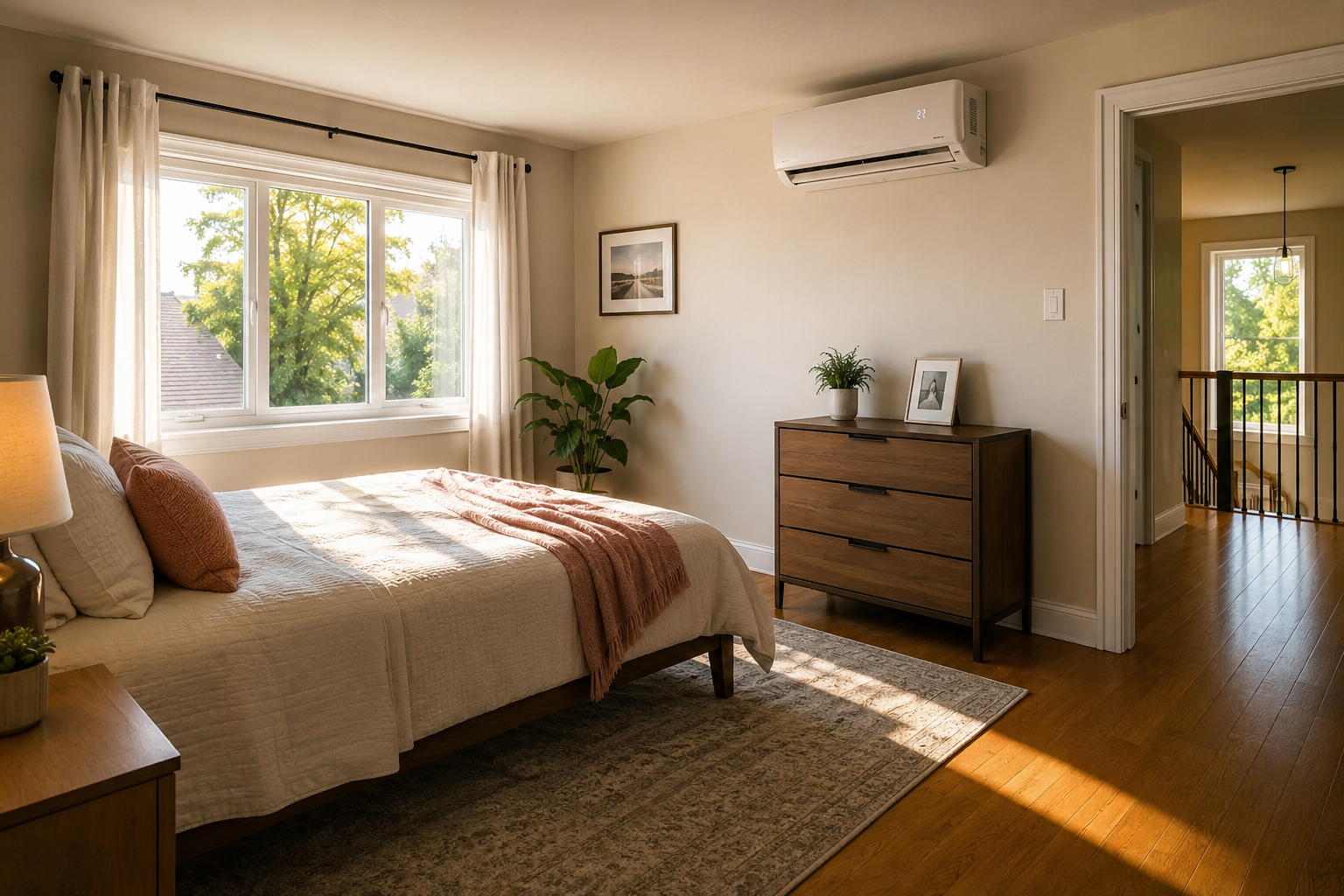
You walk downstairs and the living room feels perfect. Head up to the bedrooms, though, and it's a different story — stuffy, warm, and stubborn no matter how low you set the thermostat. If this sounds familiar, you're not alone: it's one of the most common complaints 4Most Energy hears from homeowners across the GTA, Aurora, Newmarket, and our other service areas. The good news is that there's almost always a clear, fixable reason behind it.
Why Almost Every Two-Storey Home Deals With This
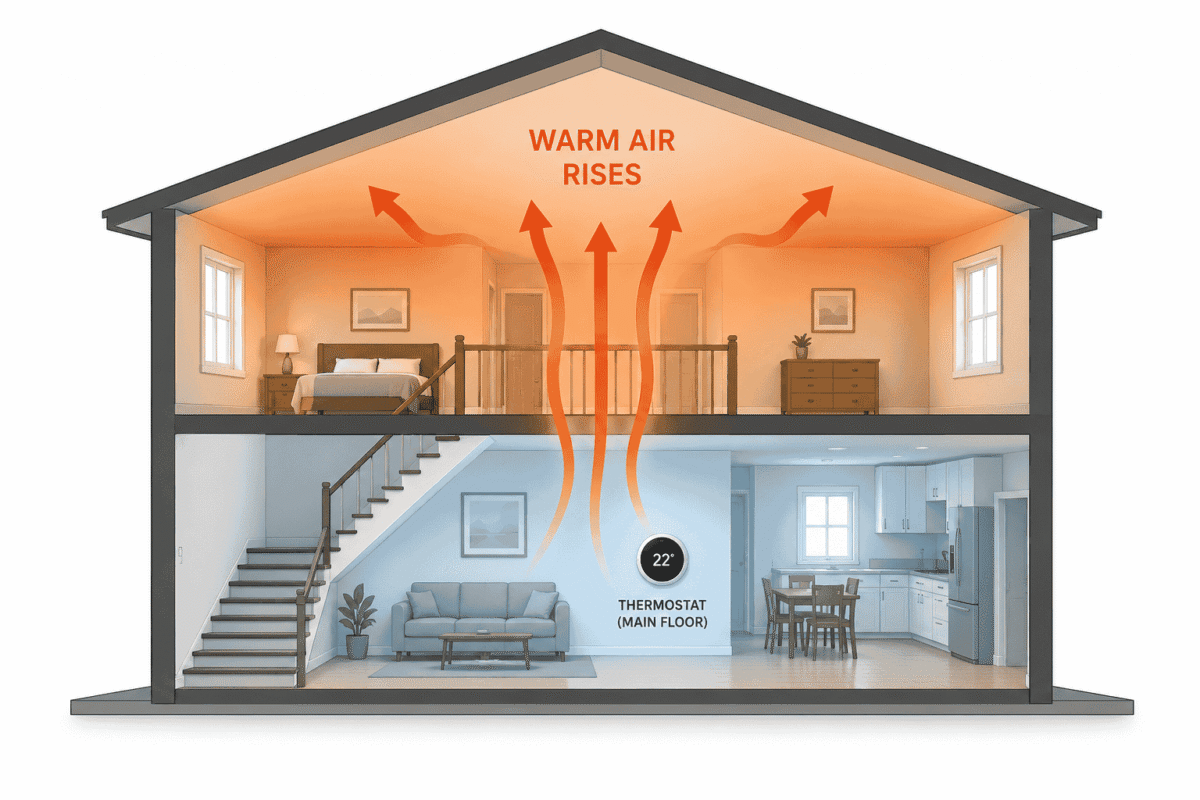
Homes with one thermostat on the main floor controlling a single HVAC system for the whole house are set up to run warmer upstairs — it's just how the physics works. Add in an attic soaking up heat from the roof, and you've got the recipe found in a huge share of the housing stock across North York, Oakville, Burlington, Barrie, and the rest of the region we serve. A small gap between floors is completely normal. A gap of 6°F or more that actually makes a bedroom uncomfortable usually means something specific is compounding that baseline effect.
What's Actually Causing It
Warm air rises and settles upstairs while cooled air sinks toward the main floor — a natural pattern that creates a baseline temperature difference on its own. On top of that, attics take in direct solar heat all day and radiate it down into the ceilings below, especially where insulation is thin or air leaks around light fixtures and hatches let heat sneak through. Because most homes run a single thermostat downstairs, the system shuts off once the main floor hits target temperature, even if the upstairs hasn't caught up — the thermostat simply has no way to know. Ductwork adds another layer: long runs to the second floor, undersized supply ducts, or leaky connections all mean less cooled air actually makes it upstairs. Rooms that face west or south, sit above a garage, or have large windows tend to run hotter regardless of what the system is doing.
Does It Flip in Winter?
Many homeowners we work with notice the opposite in colder months — the upstairs runs cooler than the main floor, particularly in rooms far from the furnace. If your home swings between a hot upstairs in summer and a cold one in winter, that's a strong sign the real issue is airflow and duct balance rather than sun exposure alone.
Free Fixes Worth Trying First
Before booking a service call, a few no-cost checks can make a real difference: swap your filter if it's been more than 60–90 days, make sure every upstairs vent is open and unblocked, switch the thermostat fan to "On" instead of "Auto" during peak heat, close blinds on sun-facing windows, and run ceiling fans counterclockwise. If you use manual dampers, adjust them seasonally, but avoid closing downstairs vents too much — it can strain your blower or contribute to a frozen coil.
When It's Time to Call 4Most Energy
If you've tried the fixes above for a week or two and the gap is still noticeable — generally more than about 5°F — the issue likely lives in your ductwork, attic insulation, system capacity, or zoning setup. It's also worth a professional look if things have gotten worse over time, your system runs constantly without catching up, or you're planning a renovation that touches the attic or ducts.
Long-Term Solutions That Actually Work
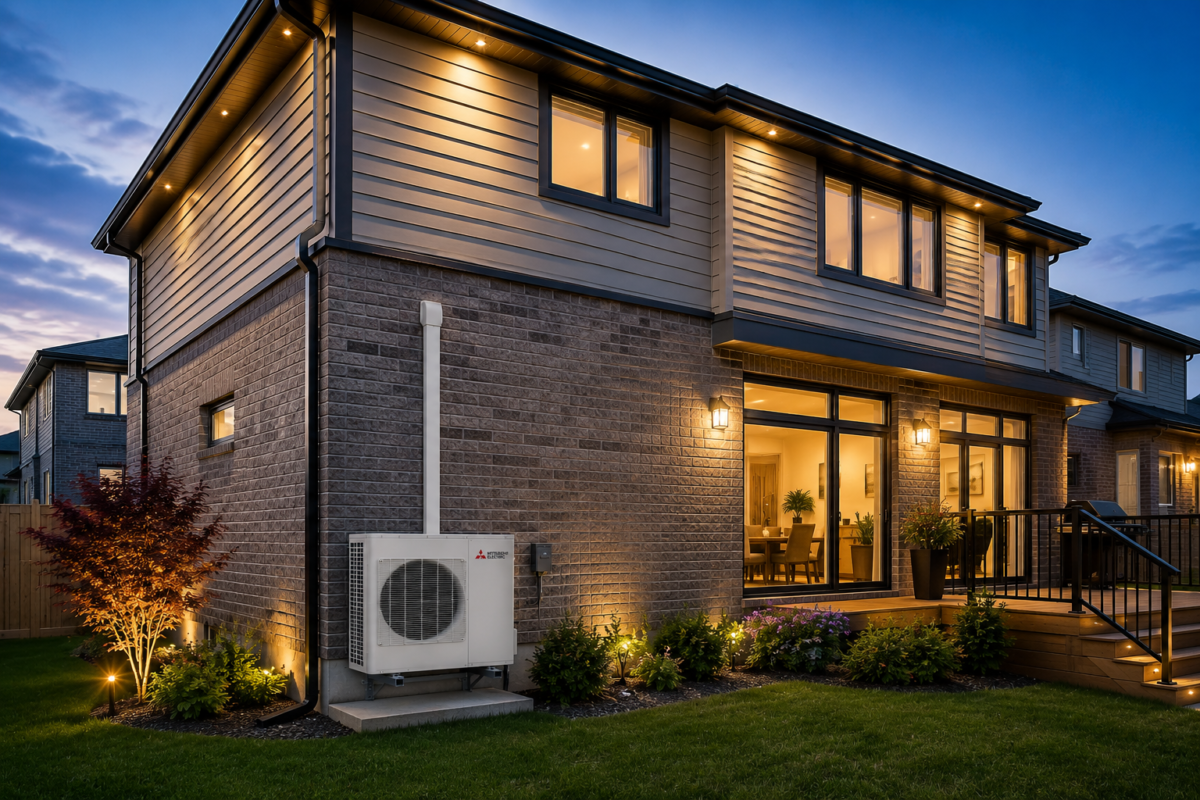
Zoned heating and cooling splits your home into independently controlled areas using dampers and multiple thermostats or sensors, so upstairs and downstairs can each reach their own target. For homes where reworking ductwork isn't practical, a ductless heat pump — one of 4Most Energy's specialties — delivers cooling and heating directly to the room that struggles most, without touching the existing duct network at all. If an inspection turns up leaky or undersized ducts, sealing and rebalancing (or replacing problem sections) can meaningfully improve airflow upstairs. Topping up attic insulation and sealing air leaks reduces how much roof heat makes it into your ceilings in the first place. And if your current furnace, AC, or heat pump is aging or was undersized from the start, an upgrade — often paired with available heat pump rebates — can solve capacity problems no amount of duct work will fix alone.
What an Assessment From 4Most Energy Looks Like
Our technicians start by actually looking at your home — your ductwork, thermostat setup, and system capacity — rather than guessing. We'll give you a straight answer on whether the fix is a simple adjustment, a duct repair, a zoning retrofit, or a ductless system, and we only recommend what your home genuinely needs. If a heat pump or ductless system turns out to be the right call, current rebate programs can help offset the cost.
Common Mistakes to Avoid
Closing downstairs vents completely to push more air upstairs can strain your blower motor and contribute to a frozen coil. Buying a bigger air conditioner without fixing ductwork or zoning first can lead to short-cycling and uneven cooling — sometimes making comfort worse. And assuming the fix has to be expensive is often wrong: many households see real improvement from the free adjustments alone, with only the remaining gap needing professional attention.
A hotter upstairs is one of the most common comfort complaints in two-storey homes across the GTA and surrounding areas
and it's almost always explainable, not mysterious. Start with the free fixes, track the results, and if a real gap remains, 4Most Energy can help you figure out exactly which upgrade a zoning,
a ductless system, duct repair, or something else will solve it for good.
Ductless Cooling FAQ: Fixing a Hot Upstairs
Why is the upstairs of my house always hotter than downstairs?
Heat naturally rises, and a single central thermostat can only read one zone of your home — so upper floors almost always run warmer, no matter how low you set the temperature. A ductless mini-split fixes this by giving upstairs rooms their own dedicated cooling, independent of the rest of the house.
Will a ductless system actually cool my second floor better than central air?
Yes. Because a ductless unit cools the specific room or zone it’s installed in, it doesn’t rely on ductwork or airflow balancing to reach the upstairs. That means faster, more consistent cooling exactly where the heat builds up most.
Do I need to replace my whole HVAC system to fix this problem?
No. Ductless mini-splits are typically added alongside your existing furnace or central air system. They target the specific rooms causing discomfort, so you’re not paying to replace equipment that’s already working fine downstairs.
Will a ductless unit lower my energy bills?
Many homeowners see savings because they’re no longer overcooling comfortable rooms just to bring the temperature down upstairs. Zoned, room-by-room control lets you cool only the spaces being used.
Is a ductless system noisy?
Ductless indoor units are designed to run quietly, which is one of the main reasons homeowners install them in bedrooms — for cooling that doesn’t disrupt sleep.
How do I know if a ductless mini-split is right for my home?
The best way to know is a proper on-site assessment.4Most Energy offers a free, no-obligation consultation to evaluate your upstairs heat issue and recommend the right setup for your home.