

Furnace Warning Signs to Check Before Winter in Toronto & the GTA

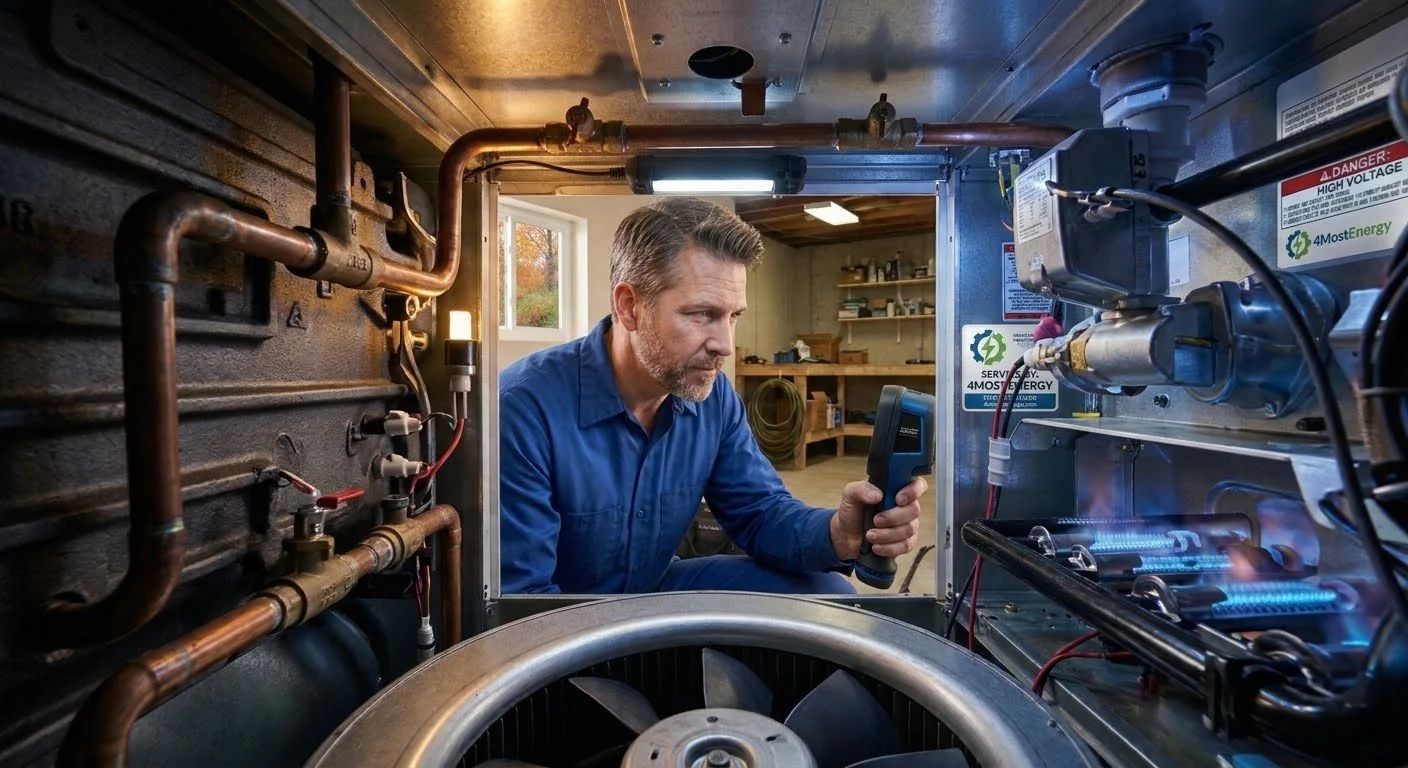
Late fall is when furnaces show their problems. The heat has been off for months. Then the first few cold nights arrive, and the system has to work hard right away. A noise you never heard before, a bedroom that stays cool, or a furnace that keeps clicking on and off are all signs to pay attention to.
The good news is that most furnace warning signs show up well before a full breakdown. If you catch them now, before the system runs nonstop through a Toronto January, the fix is usually smaller and cheaper. It's also easier to book.
This guide covers what each sign usually means, what you can safely check yourself, and when a tune-up, repair, or replacement makes the most sense.
Safety First: Signs That Need Action Right Away
Most furnace problems can wait for a service call, but these can't:
- You smell gas (a rotten-egg or sulphur smell). Leave the home right away. Don't use light switches or anything that might spark, and call your gas utility's emergency line from outside.
- Your carbon monoxide (CO) alarm goes off. Get everyone out, including pets, and call 911.
- The burner flame is mostly yellow or flickering instead of steady blue. This can mean incomplete combustion. Turn the furnace off and have it inspected before you use it again.
Fall is also a good time to test your CO alarms and replace the batteries. Every home with a gas furnace should have a working CO alarm near the sleeping areas.
The Most Common Furnace Warning Signs
These are the signs we see most often when GTA homeowners call about their furnace in the fall. Each one has a few usual causes, and most are easier to fix early.
The Furnace Turns On and Off Too Often
A healthy furnace runs in steady cycles. If yours starts, runs for a few minutes, shuts off, and soon starts again, it's short cycling. Common causes include a clogged air filter, blocked vents or return grilles, a thermostat in a bad spot or with weak batteries, a dirty flame sensor, or a furnace that's too big for the home. Constant start-stop wears out the igniter, blower, and controls faster.
Some Rooms Are Much Colder Than Others
Some difference between floors is normal, especially in older GTA homes and houses with finished basements or additions. A gap that's new or keeps growing usually points to airflow: leaky or disconnected ductwork, blocked or unbalanced registers, a dirty blower wheel, a weakening blower motor, or an overdue filter. Turning up the thermostat won't solve it. It just overheats the warm rooms.
Your Gas Bill Is Rising With No Clear Reason
If heating costs are climbing while your thermostat settings and the weather haven't changed much, the furnace may be losing efficiency. Dirty burners, restricted airflow, duct leaks, and aging parts all make the system run longer to deliver the same heat. A tune-up often brings some of that efficiency back.
Dry Air, Dust, or Stuffy Rooms
More dust on surfaces, stale-smelling air, or a home that feels unusually dry can all trace back to the heating system. Possible causes include a neglected filter, leaky return ducts pulling dust from the basement or wall cavities, or poor ventilation. These usually aren't dangerous, but they mean the system isn't moving air the way it should.
New or Louder Furnace Noises
A furnace makes some normal sounds, like a soft click at startup and the hum of the blower. Changes in that sound are often the first sign of wear:
| Sound | Common Cause | How Urgent? |
|---|---|---|
| Rattling | Loose panels, screws, or duct sections | Low. Have it checked at your next service |
| Squealing or screeching | Worn blower motor bearings or belt | Moderate. Book a repair soon |
| Humming or buzzing | Electrical parts under strain (capacitor, motor, transformer) | Moderate |
| Boom or bang at startup | Delayed ignition, often from dirty burners | High. Call for service |
| Grinding or scraping | Metal-on-metal contact in the blower | High. Shut it off and call for service |
What you can safely check yourself before calling for service:
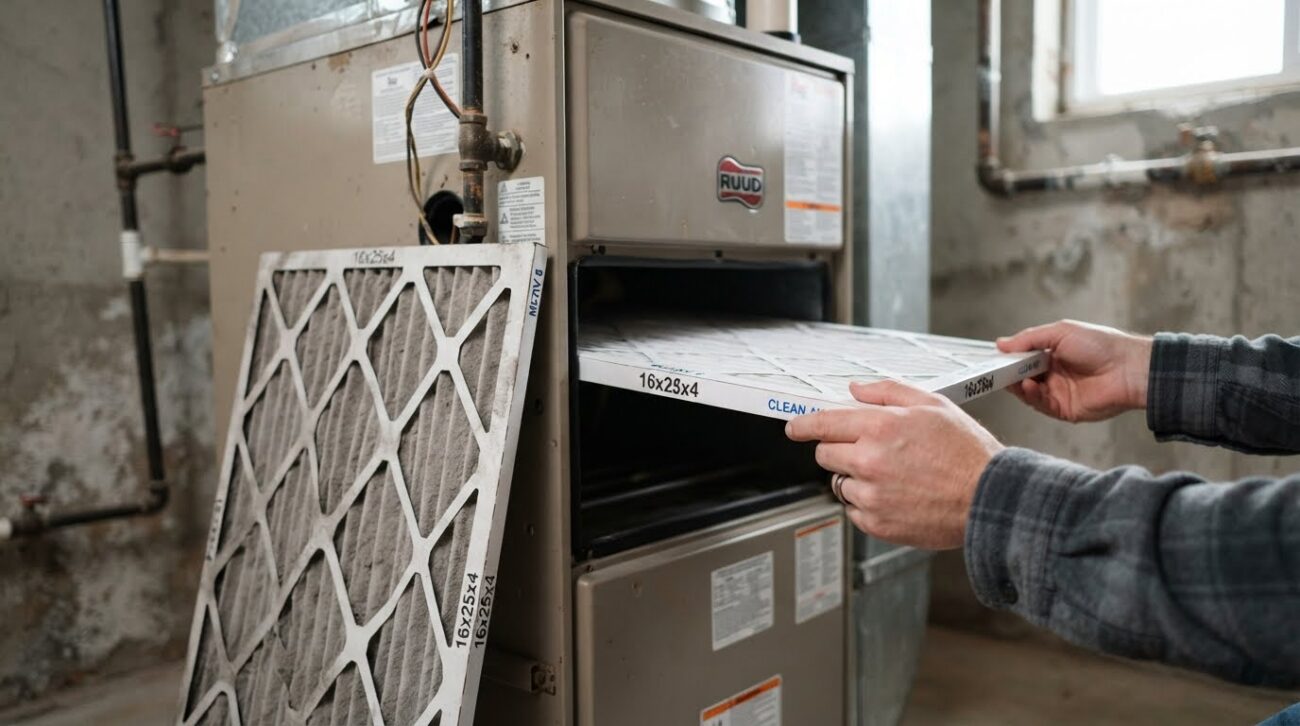
- Replace the air filter. A clogged filter is behind many short-cycling and airflow complaints.
- Open blocked vents and return grilles. Move furniture, rugs, and storage away from them.
- Check the thermostat. Replace weak batteries and make sure it's set to heat, not cool.
- Test your CO alarms and replace their batteries.
- If the problem continues, stop there. Burners, flame sensors, gas valves, and electrical parts are a job for a licensed technician.
Furnace Warning Signs: Tune-Up, Repair, or Replace?
Not every warning sign means you need a new furnace. Here's how the decision usually breaks down.
A tune-up makes sense when:
- The furnace runs but not quite right
- It hasn't been serviced in a year or more
- Problems are minor, like a dirty filter, a dirty flame sensor, or slight noises
A repair makes sense when:
- One part is failing, such as the igniter, flame sensor, inducer motor, blower motor, or control board
- The furnace is otherwise in good shape with a reasonable amount of life left
- Repair costs are modest compared with the value of the system
Replacement is worth considering when:
- The heat exchanger is cracked, which is a safety issue and usually ends the furnace's life
- Repairs are getting more frequent and more expensive
- The furnace is older, inefficient, and your energy bills keep climbing
- You also want cooling, in which case a cold-climate heat pump, on its own or paired with a furnace, may be worth comparing
A proper inspection is the only reliable way to know which path fits your system. A good technician will tell you when a simple repair is enough.
Condo Owners and Property Managers
What's Different
In condos and townhomes, the heating equipment may be a fan coil, hydronic air handler, or a small furnace in a tight mechanical closet. Many of the same warning signs apply, including short cycling, uneven heat, and new noises.
Keep in mind:
Access, replacement options, and building rules are different from a detached house.
Check with your property management or condo board before any equipment replacement.
For multi-unit buildings, keeping service records for each unit makes it easier to spot failing equipment before tenants start calling.
Is Your Furnace Getting Older and Needing More Repairs?
Age alone doesn't mean a furnace needs replacing. A well-maintained furnace can last a long time. Still, a furnace in its mid-teens or older that needs repairs every season is telling you something. Watch for:
- Several service calls over the last couple of heating seasons
- Hard-to-find or discontinued replacement parts
- A technician finding cracks or heavy corrosion on the heat exchanger
- Comfort that keeps getting worse even after repairs
If that sounds familiar, it's worth comparing the cost of ongoing repairs with a new high-efficiency furnace or a heat pump before the coldest months arrive.
FAQ
Why does my furnace keep turning on and off?
The most common causes are a clogged filter, blocked vents, a thermostat problem, or a dirty flame sensor. Replace the filter first. If the cycling continues, book an inspection.
Is it normal for a furnace to make noise when it starts?
A soft click and the hum of the blower are normal. Banging, squealing, grinding, or loud buzzing are not, and you should have them checked.
What colour should my furnace flame be?
A steady, mostly blue flame is normal. A yellow, orange, or flickering flame can mean incomplete combustion. Turn the furnace off and have a technician inspect it.
How often should a furnace be serviced?
Once a year, ideally in early fall before the heating season starts. Check your filter every one to three months, depending on the filter type and your home.
Should I repair or replace an old furnace?
If one part is failing and the furnace is otherwise in good shape, repair is usually reasonable. If repairs are frequent, the heat exchanger is cracked, or efficiency has dropped a lot, replacement is often the better long-term choice.
Why are some rooms in my house colder than others?
It's usually an airflow problem, such as leaky or unbalanced ducts, blocked registers, or a weak blower. A technician can test airflow and find where the heat is going.
Don't Wait for the Coldest Week of the Year
Most furnace warning signs, including short cycling, cold rooms, new noises, and rising bills, are easier to deal with in the fall than during a January cold snap. If you've noticed any of them, 4Most Energy can inspect your system before winter and give you a clear recommendation, whether that's a tune-up, a targeted repair, or a replacement, based on your home, your equipment, and how you want it to feel.
Request Your 20-Minute Estimate
Our Heat Pump expert will review your info, prepare an official estimate, and contact you within 20 minutes